Sunday, September 25, 2011

Sharing butterflies


Do you notice all the insects around you? If it wasn’t for my family bringing the creatures they notice to my attention I’d miss out on some wonderful experiences.

This week my husband pointed out a tiny butterfly of the Hesperiidae family, resting for the evening on our garage door. With brown/black wings folded back the butterfly was fairly non- descript. It wasn’t until I disturbed it that it opened out its wings to show the beautiful, black and orange banding, delicate feathering on the front area of its wings and body, and tiger stripes on its antennae. Being late in the afternoon the butterfly didn’t make any attempt to fly away and I returned it to the garage door soon after photographing it.


I think I’ve correctly identified the butterfly as a Western Grass-dart (Taractrocera papyria agraulia), one of the few Grass-darts listed as relatively common in the Perth area. They have a wing span of only 2cm and slight colour variations between the male and female butterflies which are often seen on the ground as the caterpillar feeds on various native and introduced grasses.

I am glad my family shares their finds with me. We live in an amazing world, with some beautiful creatures. Have you seen a similar species of butterfly living near you? Do you share the experience with friends and family?


Tuesday, September 13, 2011

Activity for children

Insects are such fascinating creatures to draw and a great exercise to improve observation skills. Encourage your children to draw one of the creatures in your garden, or perhaps try it yourself.

I thought I'd attempt drawing the mole cricket I photographed and wrote about earlier in the week.  Not the most expert drawing, but I didn't think it was too bad for a first attempt.  What do you think?

Younger children might like to have a go at colouring it in.

Mole-cricket print and colour in

Saturday, September 10, 2011

Digging up Mole Crickets


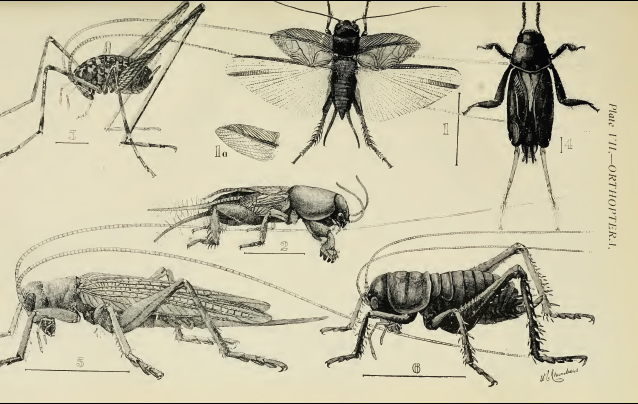
Today my son found a mole cricket while digging over the compost heap. Wanting to show me, he carried it in his hand, only to discover they have very strong burrowing forelegs, and are not very good at distinguishing ‘hand’ from ‘sand’.  Needless to say, he dropped it a few times before bringing it to me on a blue spade. Surprisingly these insect can fly despite looking so bulky, and spending much of their time burrowing underground.

As usual, we then followed up with some online research, leading to discovering newspaper articles from 1913 and 1927 and a lovely old book by entomologist Walter Wilson Froggatt (1858-1937).


Western Mail (Perth, WA) Thursday31 March 1927 p 7

MOLE CRICKET
"Scotty," Bridgetown, writes:-I am sending you an insect enclosed in a small bottle with methylated spirits hoping you will find space in your columns to tell me what it is. It digs into the ground making a small burrow wherein it emits a, very loud shrill whistling sort of noise.  This one was dug up about a foot below the surface in a clear paddock by the house, but there are several in different places all over the paddock.
The insect proved to be a mole cricket regarding which two correspondents wrote on March 3 complaining of the damage done by these insects on tennis lawns by their raising little mounds of soil round their burrows. As it lives underground and usually comes out at night, it is not familiar to many people although fairly common. Regarding this insect Mr W Froggatt in his book on Australian insects says:-"The mole cricket (Gryllotalpa coarctata) is found all over the interior, forming under- ground tunnels in the sand along the edges of watercourses; it was collected in the Horn Expedition in Central Australia, and is also found about Sydney, It is of the usual dull brown tint with hooded thorax and spade-shaped forelegs.'' These little creatures are vegetable feeders and live on the roots of grass and other plants, It gets its name from the fact that it burrows like a mole and is provided with strong front claws for the purpose.

Australian insects. By Walter W. Froggatt., Sydney,W. Brooks[1907]


 Further reading:  Western Australian Museum fact sheet


Addendum: 15 September 2011:

I've had some wonderful feedback from Dr Terry Houston, Senior Curator (Entomology), Dept. of Terrestrial Zoology, Western Australian Museum, who was kind enough to read my article and he tells me "the Sunday Times article could confuse readers because Cylindracheta kochii is a sandgroper, not a mole cricket, and wouldn't push up mounds of soil. However, at the time the article was written, sandgropers and mole crickets were classified into one family. The mounds of soil referred to might have been produced by a mole cricket but could also have been the work of a native bee."


Thursday, September 8, 2011

Adventure at Perenjori - Wildflowers & Lizards

It's amazing what can be achieved in just one weekend. My husband and I had been told this was one of the best wildflower seasons ever. So we decided to travel over 720km just to take in the breathtaking sight of wildflowers (and hopefully a fascinating creature or two) in the Perenjori region. We were not disappointed on either account. We walked for kilometres surrounded by carpets of pink, white and yellow everlastings. Granite outcrops sheltered a variety of orchids, lizards and other creatures including cockroaches that sprayed a foul smelling deterrent designed to protect them from predators. Waterholes were filled with the fattest tadpoles and fat, lazy frogs sheltering under rocks from the perfect blue-sky days. I was so busy enjoying my weekend I managed to capture only a small portion on camera. Enjoy!


Video Music: Strobelites (Escapism) by The Womb can be found at http://www.jamendo.com/en/track/819443

Friday, August 26, 2011

From a chomped up garden to craftsmanship inspired by insects

Caterpillars are chomping away on my greenery, stripping my birds nest fern and the salad rocket down to a few tattered stalks.  When I picked the black/brown furry caterpillars off what remained of my garden they curled into tight balls, refusing to unfurl so I could photograph them.   How frustrating!  I gave up waiting for them to be accommodating and tried to get ‘that great macro shot’ anyway.  (And, considering my equipment, an old Canon Powershot  A70 – without any special lenses – and a torch to counteract the sun setting, I thought I managed a reasonably photo anyway).


I am annoyed the caterpillars have been so destructive of my plants, but I am reminded of a quote from The Little Prince by Antoine de Saint-Exupéry:
"Well, I must endure the presence of two or three caterpillars if I wish to become acquainted with the butterflies. It seems that they are very beautiful." (Page 34)

Many years ago, I created the above illustration that went with the quote, to remind myself not to get frustrated at creatures (and events) such as my ‘curled-up-garden-destroying caterpillars’, but instead look for the optimistic ‘butterfly’ approach. So, I decided to spend my evening exploring how creatures might have inspired artists and crafts-people.  Below is what I found:

I am not sure Michael Beitz’s undulating dining table was inspired by insects, but it reminds me of a caterpillar or inchworm, and eating a meal at the table would be just as frustrating as photographing my uncooperative, furry little friends.
Flying Katydid designed by Brian Chan, September 2006 - used with permission
Lizard 2 designed by Brian Chan, November 2007 - used with permission
Goliath beetle (Goliathus goliathus) designed by Brian Chan, August 2006 - used with permission
Brian Chan’s beautiful origami - it is extraordinary that such he achieves such detail with just one uncut sheet of paper.

ALMERIA-2 by Michel Halliard - used with permission

SIGMUND-4 by Michel Halliard - used with permission

Dragster by Michel Halliard - used with permission

Michel Halliard's unique ‘beetle-like’ chairs are amazing and despite my having major issues with the materials he has used to create his pieces I find I can still admire his designs and craftsmanship. I just desperately wish he had used fake instead of exotic wildlife to create his pieces.
Homo Faber by Sarah Garzoni, 2006

I also came across the ‘The Endless Swarm’ blog, which is full of creative works including Sarah Garzoni’s ‘Swiss army knife’. Although my interpretation of the piece is different to the artist’s original intention, it appears to me to capture both the fear/danger factor many people have of insects, while also representing the usefulness of insects.

Now, at the end of the evening, I have forgiven my garden chomping caterpillars, been inspired by some amazing artisans and I am looking forward to “being acquainted with butterflies”.